Reference
Diseases & fungi
Rots, leaf spots, mildews and physiological problems, from the first signs to prevention.
28 articles
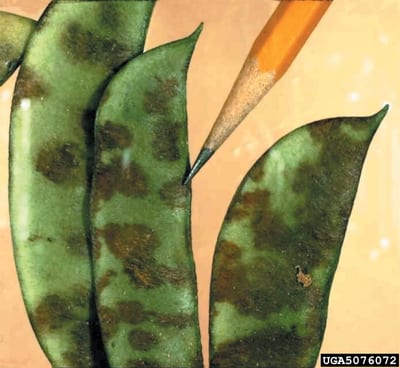 HarmfulAnthracnoseAlso: Colletotrichum, DisculaAnthracnose is a name for a group of fungal diseases, caused by various species that each usually attack particular hosts, that produce dark dead lesions on leaves, stems and fruit. The spores are spread by splashing water, so the disease needs wet conditions and cannot spread in dry weather.
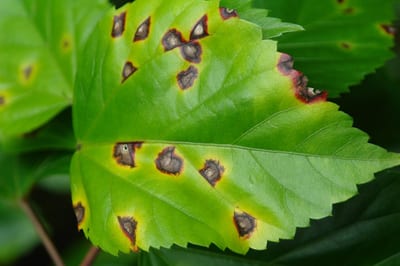 HarmfulBacterial leaf spotAlso: Bacterial blight, Xanthomonas leaf spotBacterial leaf spot is a group of leaf diseases caused mainly by Xanthomonas, Pseudomonas and Acidovorax bacteria. It shows as dark, water-soaked spots, often with a yellow halo, and spreads in splashing water. There is no cure for infected leaves, so prevention and early removal matter most.
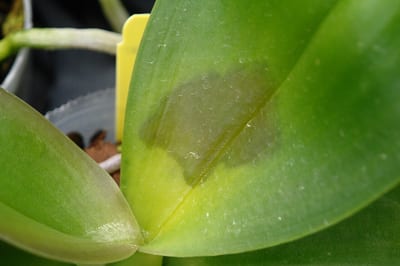 HarmfulBacterial soft rotAlso: Erwinia soft rot, Pectobacterium soft rotBacterial soft rot is a fast, wet decay caused mostly by Pectobacterium and Erwinia bacteria, and sometimes Pseudomonas. The bacteria dissolve plant tissue into a mushy, foul-smelling mass. On orchids such as Phalaenopsis it can destroy a plant within two to three days.
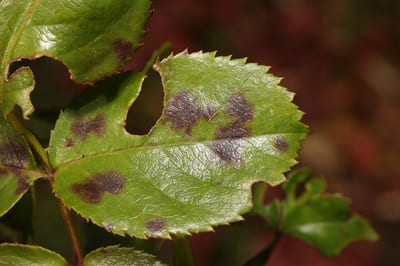 HarmfulBlack spot of rosesAlso: Rose black spot, Diplocarpon rosaeBlack spot is a fungal disease of roses caused by Diplocarpon rosae. It produces dark spots on leaves, yellowing and early leaf fall, and weakens plants year after year. The fungus needs wet leaves to infect, and it overwinters in fallen leaves and stem lesions.
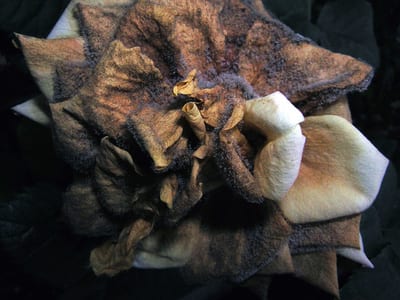 HarmfulBotrytis (grey mould)Also: Grey mould, Gray moldBotrytis cinerea is a very common fungus that grows on dead and dying plant material and can then invade living tissue, especially flowers, fruit, soft growth and wounds. It is favoured by mild, humid, stagnant conditions and crowded plants. Good hygiene and air movement are the main defences.
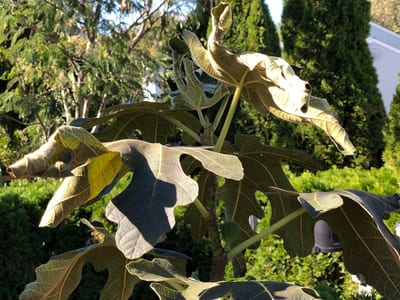 HarmfulCold damageAlso: Chilling injury, Frost damageCold damage covers chilling injury, which harms tropical and subtropical plants at temperatures above freezing, and frost injury below freezing. Most tropical foliage plants can be damaged below about 10 °C (50 °F). Symptoms show within hours to a few days and range from water-soaked patches to blackened, collapsed leaves.
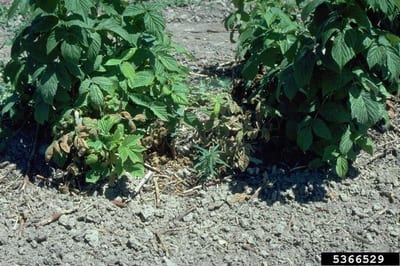 HarmfulCrown and stem rotAlso: Crown rot, Stem rotCrown and stem rots attack the base of the plant where stem meets soil, cutting off water and nutrients. They are caused mainly by soil-borne water moulds (Pythium, Phytophthora) and fungi such as Rhizoctonia, Fusarium, Sclerotinia and Sclerotium. Wet, poorly drained mix and damaged tissue are common triggers.
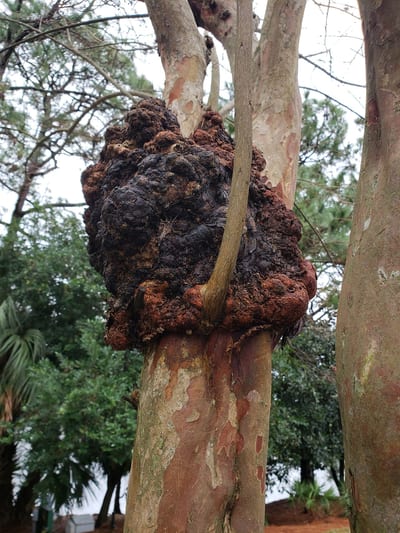 HarmfulCrown gallAlso: Agrobacterium tumefaciens, Rhizobium radiobacterCrown gall is a bacterial disease that makes plants grow tumour-like swellings, usually where the stem meets the roots. The soil bacterium enters only through fresh wounds and inserts some of its own DNA into plant cells, which then grow out of control. Galls cannot be cured, so prevention centres on clean stock and avoiding wounds.
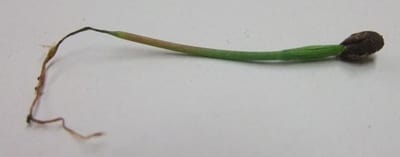 HarmfulDamping offAlso: Seedling damping-off, Wire stemDamping off is the death of seeds and young seedlings caused by several soil-borne organisms, including Pythium, Phytophthora, Rhizoctonia, Fusarium and sometimes Botrytis. It is worst in wet, cool, crowded and poorly ventilated conditions. Clean media, clean containers and careful watering prevent most cases.
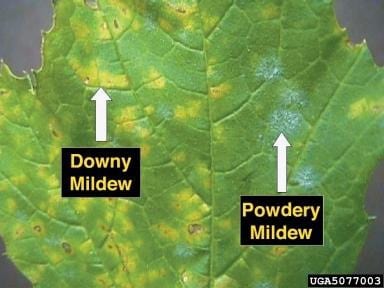 HarmfulDowny mildewAlso: Peronosporaceae, PeronosporaDowny mildews are caused by fungus-like water moulds (oomycetes), not true fungi, and are unrelated to powdery mildew. They need long periods of wet leaves, so they are worst in wet weather and humid greenhouses. Spores form on the underside of leaves, often at night.
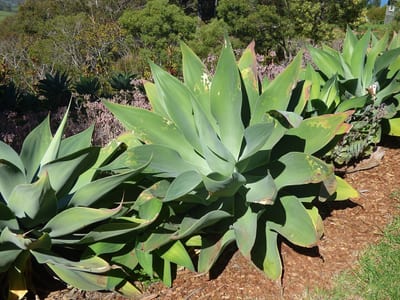 HarmfulEdemaAlso: Oedema, IntumescenceEdema is a non-infectious disorder in which roots take up water faster than the leaves can lose it, so leaf cells swell and burst. It leaves small raised blisters that turn into tan, corky scabs, mostly on leaf undersides. It is cosmetic and does not spread, but it signals that watering and conditions need adjusting.
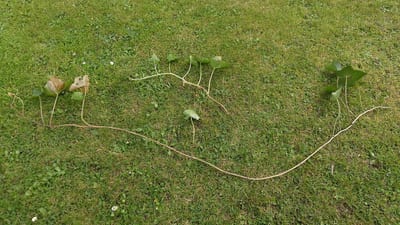 HarmfulEtiolationAlso: Leggy growth, StretchingEtiolation is the stretched, pale growth a plant makes when it does not get enough light. The plant spends its energy lengthening stems to reach light, so internodes become long, stems weak and leaves small and pale. More light fixes new growth, but stretched stems stay stretched.
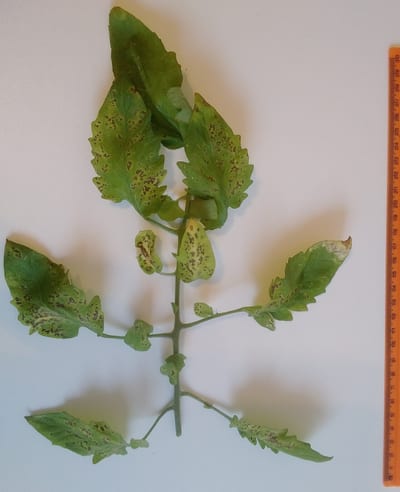 HarmfulFungal leaf spotAlso: Leaf spot, SeptoriaFungal leaf spots are small dead patches caused by many different fungi that infect leaves when they stay wet. Most are cosmetic at first but can defoliate a plant if left unchecked. Keeping leaves dry and removing infected material are the core controls.
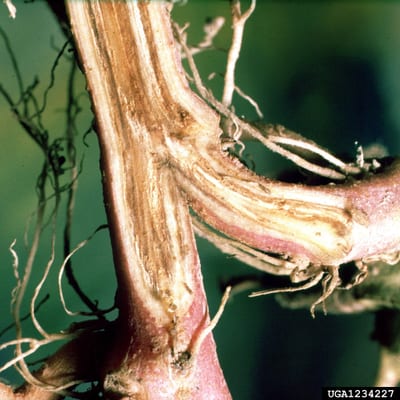 HarmfulFusarium wiltAlso: Fusarium oxysporum, Panama disease (in bananas)Fusarium wilt is a soil-borne fungal disease caused by forms of Fusarium oxysporum that enter through the roots and block the plant's water-conducting tissue. Each form attacks only a particular host group. There is no cure once a plant is infected, so prevention and resistant varieties are the main tools.
- HarmfulLow humidity damageAlso: Dry air damage, Brown leaf tipsMany tropical houseplants come from humid habitats, and very dry indoor air can make their leaves lose water faster than it is replaced. The result is crisp brown leaf tips and edges and early dropping of leaves, buds and flowers. A humidifier, grouping plants or an enclosed case helps; misting does very little.
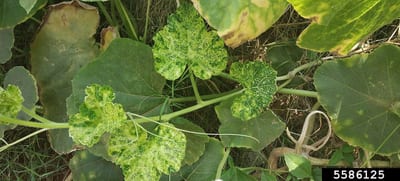 HarmfulMosaic virusesAlso: Cucumber mosaic virus (CMV), Tobacco mosaic virus (TMV)Mosaic viruses are a mixed group of plant viruses named for the patchy light- and dark-green mottling they cause on leaves. They are not one family: cucumber mosaic virus and tobacco mosaic virus, for example, are unrelated. There is no cure, so infected plants are removed and the spread is stopped.
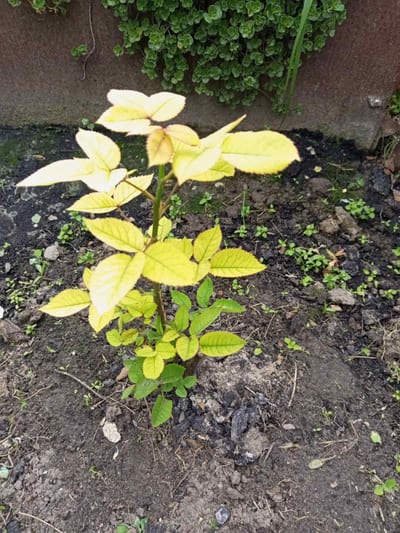 HarmfulNutrient deficiencyAlso: Chlorosis, Hunger signsA nutrient deficiency occurs when a plant cannot get enough of an essential element, either because the mix is exhausted or because roots cannot take it up. Where symptoms appear first is a useful clue: mobile nutrients show on older leaves, immobile ones on new growth. Symptoms overlap with many other problems, so check watering and roots before adding fertiliser.
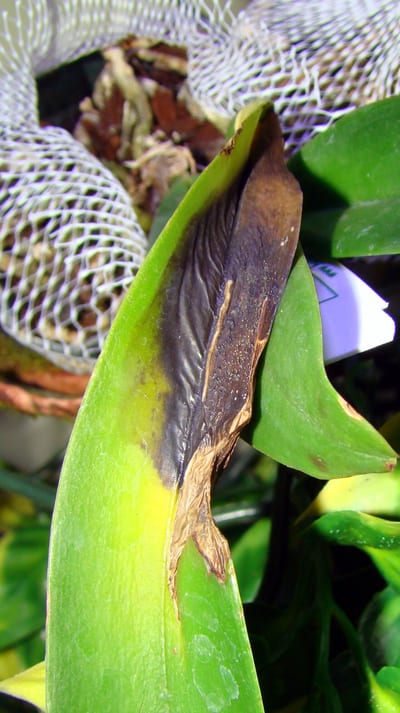 HarmfulOrchid black rotAlso: Black rot of orchids, Phytophthora cactorumBlack rot is a fast-moving rot of orchids caused by water moulds, Phytophthora cactorum and Pythium ultimum. It spreads in water, so wet leaves, splashing and constantly damp media are the danger. Cattleya orchids are especially susceptible.
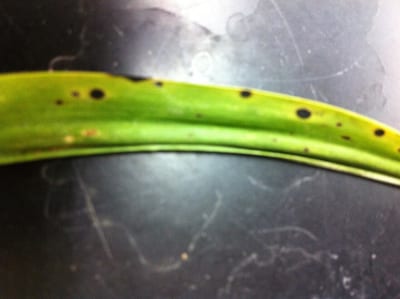 HarmfulOrchid virusesAlso: Cymbidium mosaic virus (CymMV), Odontoglossum ringspot virus (ORSV)More than 27 viruses infect orchids, but two dominate worldwide: cymbidium mosaic virus (CymMV) and odontoglossum ringspot virus (ORSV). Both spread mainly on cutting tools and through division, persist for long periods on tools and in media, and cannot be cured. Mixed infections are common and cause worse symptoms.
- HarmfulOverwateringAlso: Waterlogging, Soggy soilOverwatering is not about the amount of water poured in once, but about potting mix that stays wet for too long. Wet mix holds too little air, fine roots die from lack of oxygen, and the plant then wilts because damaged roots cannot take up water. It is one of the most common causes of houseplant decline and opens the door to root rot and fungus gnats.
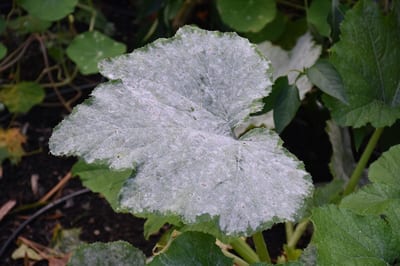 HarmfulPowdery mildewAlso: Erysiphaceae, ErysiphalesPowdery mildew is a group of fungi that grow as a white, dusty coating on leaves, stems and flowers. Unlike most leaf fungi it does not need wet leaves: humid, still air around a plant that is short of water suits it best. Most species attack only a narrow group of related plants.
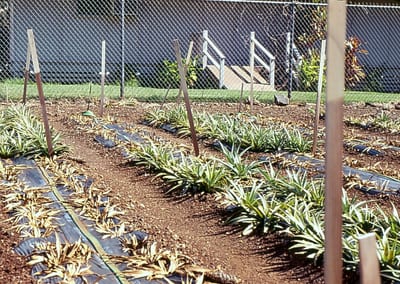 HarmfulRoot rotAlso: Pythium root rot, Phytophthora root rotRoot rot is decay of the roots, most often caused by water moulds such as Pythium and Phytophthora and by some true fungi such as Rhizoctonia and Fusarium. These organisms thrive in wet, poorly drained soil and potting mix, so overwatering and pots that stay wet are the usual trigger.
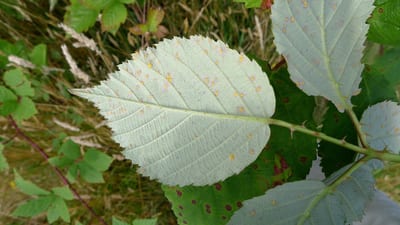 HarmfulRustAlso: Rust fungi, PuccinialesRusts are fungi that form small, powdery pustules of spores, usually on the undersides of leaves. They can only live on living plants and each rust species attacks a narrow range of hosts; some need two unrelated host plants to complete their life cycle. Infection is favoured by long periods of leaf wetness.
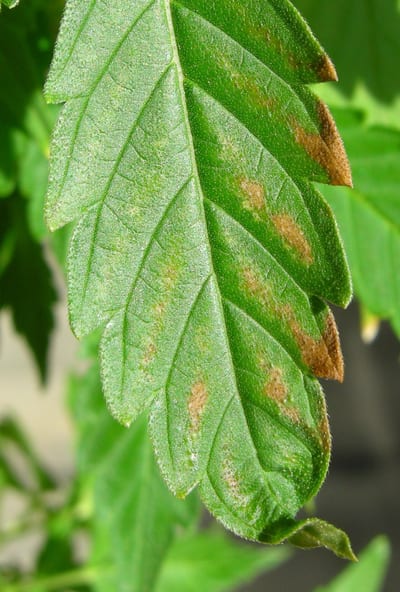 HarmfulSalt and fertilizer burnAlso: Fertiliser burn, Soluble salt injurySalt and fertilizer burn happens when dissolved salts from fertiliser or hard water build up in the potting mix. High salt levels make it harder for roots to take up water, killing root tips and scorching leaf tips and edges. Flushing the mix with plenty of clean water, or repotting, usually fixes it.
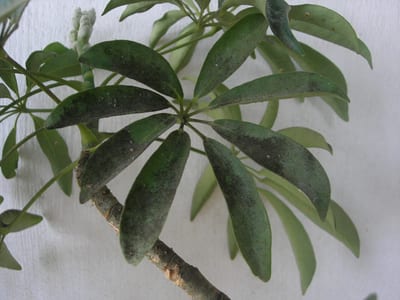 HarmfulSooty mouldAlso: Sooty mold, CladosporiumSooty mould is a black coating of several kinds of fungi that grow on honeydew, the sugary liquid excreted by sap-sucking insects. The fungi do not infect the plant, but a heavy layer blocks light and slows growth. Clearing the insects that make the honeydew is the real cure.
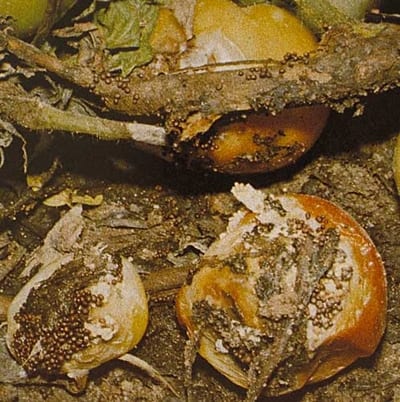 HarmfulSouthern blightAlso: Sclerotium rolfsii, Athelia rolfsiiSouthern blight is a soil-borne fungal disease that rots the stem at the soil line, causing sudden wilting and death. It is common in warm, moist conditions in tropical and subtropical regions and attacks hundreds of plant species. It is recognised by a white fungal fan and small, round, mustard-seed-like sclerotia.
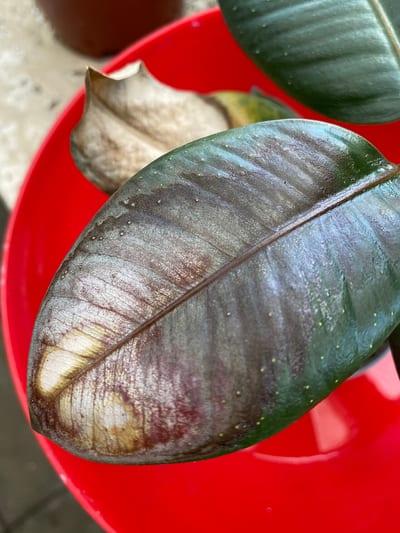 HarmfulSunburnAlso: Leaf scorch, SunscaldSunburn is damage from more light than a leaf is adapted to, usually after a plant is moved abruptly into stronger sun. The light breaks down chlorophyll, leaving bleached patches that later turn brown and brittle. It is not infectious and is prevented by gradual acclimatisation.
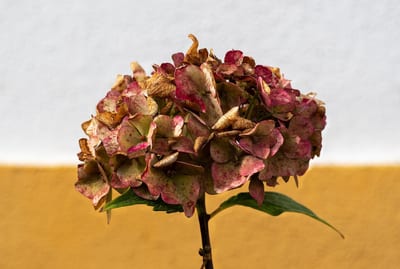 HarmfulUnderwateringAlso: Drought stress, Dry soilUnderwatering happens when a plant's potting mix dries out further or for longer than the plant can tolerate. It shows as wilting, curling and crisp brown edges, and chronic drying can kill a plant. It is usually easy to reverse if caught before the roots dry out completely.